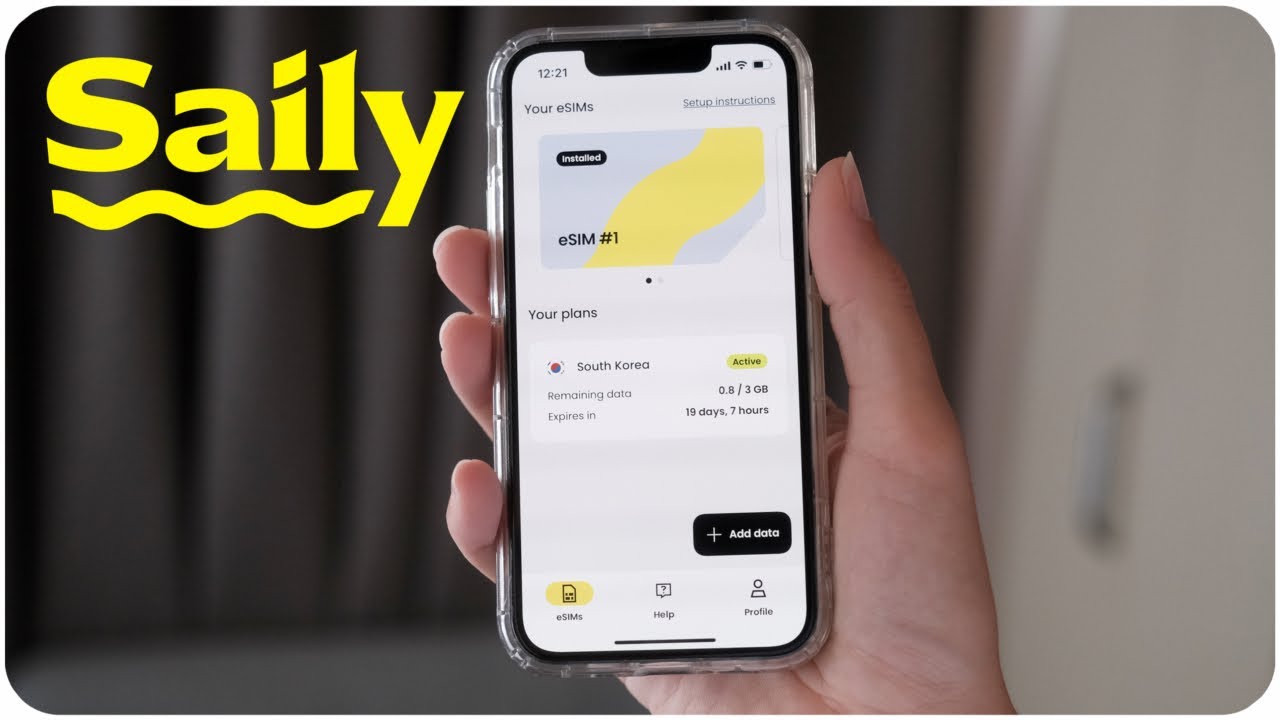
If you’ve ever landed after a long-haul flight, tapped “Connect,” and watched your roaming charges spiral before your coffee cooled, you’re the audience this piece is for. eSIM trial plans offer a controlled way to test coverage, speed, and pricing without committing to a full month or swapping physical cards. With a little planning, you can extract real value from these trials — sometimes enough to cover a short trip entirely.
This is a field guide from someone who has burned through dozens of trial eSIMs in airports, trains, taxis, and coffee shops from San Diego to Singapore. Consider this a practical map: how eSIM trials work, where they shine or fail, and tactics that squeeze every megabyte of value from a limited bucket of data.
What an eSIM trial really is
A standard eSIM trial plan is a limited data package, sometimes with a short validity window or throttled speed, offered by carriers and independent providers so you can try eSIM for free or nearly free. The fine print matters. Some trials are genuine freebies with a small data cap, others are token-priced like an eSIM $0.60 trial to verify activation and compatibility. The objective is the same: show you coverage and stability before you buy a prepaid travel data plan.
You’ll see several flavors:
- Free eSIM activation trial: zero-cost install and a small data pool, typically 100 to 500 MB, valid for 1 to 7 days. Prepaid eSIM trial: a very cheap package, often under 2 dollars, with 300 MB to 1 GB and a short validity. Country-specific trials: an eSIM free trial USA or a free eSIM trial UK with unique network partners and different speed caps. Global eSIM trial: a single digital SIM card usable across multiple countries, often with tighter caps or lower speed than local trials.
Trials rarely include voice minutes. SMS is uncommon. Data only is the norm, which suits maps, rideshare, and messaging apps over Wi‑Fi calling.
Why trials beat old-school roaming
Traditional roaming behaves like a running taxi meter. That’s fine for two messages at the gate, not for navigation or a photo-heavy day. A mobile eSIM trial offer gives you a controlled alternative. You test the network where it matters — the basement metro, the countryside Airbnb, the crowded stadium — before paying for a long plan. You also control when to attach to the trial line and when to fall back to hotel Wi‑Fi. For frequent travelers, these trials stack into a cheap data roaming alternative that can cover the arrival window and decision period.
Over dozens of trips, the biggest win has been removing uncertainty. I land in Madrid, scan the arrivals hall, and launch a trial eSIM for a day. If speeds stay above 20 Mbps and coverage holds in the city center, I convert to a short‑term eSIM plan from the same provider or another with better rates. If performance falters, I switch carriers without sunk cost.
How to prep your phone and avoid activation snags
Compatibility is the first gate. iPhone XS and later, most recent Google Pixels, and many modern Samsungs support eSIM. Dual eSIM on some models lets you carry a personal line plus a travel eSIM. Carriers sometimes lock devices to their own eSIM profiles; check your settings before you leave.
The smoothest path looks like this:
- Confirm your phone is eSIM capable and unlocked. In Settings, look for “Add eSIM,” “Cellular,” or “SIM manager.” If you see “No restrictions,” you’re in good shape. Update your operating system a few days before travel. eSIM profiles depend on carrier bundles that ship with OS updates. Prepare ID if required. A few providers request basic KYC, typically a passport photo or driver’s license, especially for an international eSIM free trial. Secure reliable Wi‑Fi for the install. Airport Wi‑Fi works fine. Avoid captive portals that reset mid-download. Disable data roaming on your primary line to prevent accidental carrier roaming fees while you set up the trial eSIM.
With that, activation typically takes 2 to 5 minutes. Some apps push the eSIM profile directly. Others give you a QR code to scan. Keep the app installed for top-ups and troubleshooting.
What “free” really buys: reading the small print
Free is not a lie, but it’s rarely unlimited. The most common caps I see:
- Data: 100 to 500 MB on a zero-cost trial. Enough for airport navigation, a few maps sessions, and some messaging. Validity: 24 hours to 7 days from first activation. A timer starts when the eSIM first attaches to a network. Speed: Sometimes 1 to 5 Mbps after a small high-speed allotment. Burst speed may hit 50 to 150 Mbps on 5G for a moment, then settle lower.
Some trials reserve certain apps or protocols. For example, tethering might be blocked, or heavy video throttled. Fair use clauses let providers limit usage that looks like hotspot abuse or background sync storms. None of this is nefarious; it’s how they avoid subsidizing a full vacation from a free bucket.
USA and UK specifics: where trials shine and where they don’t
For an eSIM free trial USA, coverage depends on which backbone the provider uses, commonly AT&T, T‑Mobile, or Verizon. In practice, many international eSIM brands partner with T‑Mobile for trials due to easier onboarding. Expect good speeds in major cities and airports, slower service in national parks and rural valleys. If you plan a road trip through the Rockies, a local prepaid SIM or a plan explicitly mentioning Verizon coverage may be safer.
On a free eSIM trial UK, you’ll often land on O2, EE, Three, or Vodafone. City coverage is rarely a problem. The test is rail corridors and coastal towns. London Underground Wi‑Fi offloads a lot of usage; on overground routes, I see 10 to 40 Mbps most days. Scotland’s Highlands remain patchy across all carriers. If you’re chasing reliability over cost, choose a provider that publishes its UK carrier partners and supports network switching.
The decisive moments: where to test and what to measure
A trial is wasted if you only test at a café near your hotel. Spread your checks across typical use cases:
- Arrivals area and transport hubs: rideshare pickup zones and metro entrances reveal how quickly data attaches. Accommodation: inside rooms with thick walls can make or break a provider’s signal. Run a quick speed test and a map search. Commute routes: train lines, ferry terminals, suburban buses. Watch for handoff drops. Crowded spots: stadiums, festivals, or busy markets. Good providers hold a usable connection, even if speed dips.
Look for stability first, speed second. A stable 10 Mbps beats a spiky 100 Mbps that drops calls. Latency under 80 ms feels snappy in maps and messaging. You’ll notice the difference loading ride-hailing apps under pressure.
Making a tiny data cap stretch
You can turn a 300 MB mobile data trial package into a surprisingly useful buffer if you manage background use. I do two things before leaving the hotel Wi‑Fi: pre-cache maps and sync my inbox. Then I keep the phone on low-data mode and disable auto-updates. If I need a ride from the airport, I place the request on Wi‑Fi, then let cellular handle the driver’s arrival updates.
Messaging apps can burn data if they back up photos and videos automatically. Set backups to Wi‑Fi only. If someone sends a 20 MB clip, wait. Calls over Wi‑Fi are fine when available, but I avoid pure cellular VoIP on trial data unless it’s urgent.
Converting a trial to a full plan without overpaying
Providers hope you convert to a paid package. Sometimes that’s the right call because the sign-up friction is already behind you. Still, compare. Use the trial to validate the network, then price‑check a short‑term eSIM plan from two or three competitors. Rates move, and a low‑cost eSIM data bundle with a 7‑day validity might beat a 30‑day package for a weekend trip.
If your trip crosses borders, the calculus changes. A global eSIM trial that proved stable might justify a regional plan that covers 20 to 70 countries. The effective per‑GB price may be higher than a local country plan, but the convenience of not swapping profiles at every border can be worth it. For a long multi-country trip, mix and match: a temporary eSIM plan for the first country to test speed, then a regional plan for the rest.
When a $0.60 trial is better than a free one
Tiny paid trials exist for two reasons: fraud prevention and to keep the offer available. I’ve found these eSIM $0.60 trial deals often come with fewer restrictions. Sometimes you get 500 MB plus tethering, or a longer validity window. If your goal is to test hotspot performance for a laptop session or confirm stable video calls, a cheap paid trial can be a smarter test than a free eSIM trial that bans tethering.
From a budgeting standpoint, a dollar to avoid a 40-dollar mistake is money well spent. I’ve used these micro-trials to vet network resilience before a remote client call. If the network faltered, I pivoted to a backup carrier on the spot.
The overlapping triangle: price, performance, and simplicity
Every eSIM trial plan sits on a triangle:
- Price: free or close to it. Performance: speed, latency, stability in real places you’ll be. Simplicity: easy activation, reliable app, clear top-ups.
You rarely get all three at maximum. The best eSIM providers strike a balance. Some offer slick apps and instant installs but slightly higher per‑GB pricing. Others are bare-bones and cheaper, but the app looks like it came from 2015 and customer support takes a day. If you value smooth onboarding for a family trip, pay a small premium. If you’re backpacking for a month and swapping countries weekly, prioritize flexible regional coverage and transparent rates.
Privacy, security, and KYC realities
Because an eSIM is a network access credential, some providers ask for ID. This is common in parts of Europe and Asia, less so for domestic USA trials. If you’re uncomfortable uploading documents, look for a provider that supports anonymous trials or email-only verification. Be aware that hotspots at airports and cafés can be hostile networks. Install the eSIM over a trusted connection when possible and avoid entering payment details on sketchy Wi‑Fi portals.
If your job involves sensitive work, a short VPN session on public networks is a cheap layer of defense. Most trials have no issue with VPN use, though a few throttle or block specific protocols. If a VPN is key to your workflow, test it during the trial before you commit.
Multi-device juggling: phone plus tablet or laptop
Trials almost always target phones, but many providers allow tethering on paid plans. Trial restrictions vary. If you need a cheap data roaming alternative for a few hours of laptop work, check whether tethering is permitted. In my experience, if tethering is blocked, you’ll still pass traffic for a smartwatch or low-volume device via Bluetooth tether, but that’s inconsistent and not worth relying on.
For tablets that support eSIM directly, you can load the same provider but may need a separate profile. A mobile eSIM trial offer for tablets is rare, so test on the phone and use a short paid add‑on for the tablet if you must.
Common failure modes and fast fixes
Not every activation succeeds on the first try. A few patterns come up repeatedly:
- eSIM installs but no data: toggle airplane mode for 15 seconds, then re-enable. Next, check APN is set automatically; if not, the provider’s app usually lists the APN name to enter. Stuck on 3G despite 4G/5G coverage: ensure the correct network selection mode is “Automatic.” Manually picking a partner network can help if automatic roaming chooses a weak tower. Trial plan shows active but timer never starts: you haven’t attached to a partner network yet. Move to open sky or reboot. Indoors near elevators is a common dead spot. iMessage or WhatsApp confusion: if your trial eSIM takes the default for data, iMessage may try to register to the new number or data line. Lock your messaging number to the primary SIM in settings to avoid re-verification loops.
Most providers include a diagnostics view in the app with signal strength, roaming state, and plan status. Screenshot this before contacting support; it speeds up help.
When to go local vs global
If you’re staying within a single country for a week or more, a local prepaid eSIM trial that converts to a local plan usually yields the best speeds and price. City dwellers and domestic providers tune their networks for local traffic. On the other hand, a global eSIM trial is ideal for cross-border itineraries, short layovers, or when you value simplicity over the last dollar per gigabyte. For example, a three-country rail trip across the Benelux can run on one regional plan with no SIM juggling.
There’s also the middle path: start with an international eSIM free trial for day one, switch to a https://soulfultravelguy.com/article/esim-free-trial local low‑cost eSIM data package once you’ve settled and can compare options.
Provider vetting: signals that matter
It’s easy to get lost in marketing. A few signals correlate with a smooth experience:
- Transparent country lists with named carrier partners rather than vague “best available” claims. Clear policy on tethering and speed throttles. In-app top-up with small increments. Being forced into 10 GB bundles for a weekend is wasteful. Real-time usage meters that refresh without delay, so you don’t overrun the cap. Human support that answers within business hours in your destination’s time zone, or a self-help library with recent screenshots.
“Unlimited” on a trial usually means generous until a fair use threshold, then throttled. Treat that as “sufficient for messaging and maps” rather than “stream your shows.”
Tactics to combine trials and stretch your budget
For short trips or work sprints, you can chain small packages without pain. If your first trial runs out on day two, switch to a prepaid eSIM trial from a second provider for another day of testing. Once satisfied, buy a paid plan sized to your remaining days. This avoids overcommitting on day one.
A second tactic: reserve trials for arrival and departure days. Those are the highest stress periods when you need instant data for transport, check-in codes, and alerts. Fill the middle of the trip with a standard plan sized to your daily average. I budget 300 to 500 MB per day for maps, messages, and light browsing. Add another 500 MB if you regularly use ride-hailing or upload media on cellular.
Tourists vs. remote workers: different priorities
A travel eSIM for tourists has one job: keep you connected for navigation, tickets, dining, and quick sharing. Peak demand hours are midday to evening, often in crowded tourist zones. Stability in dense areas matters more than all-day speed.
Remote workers need different guarantees: reliable signal at their accommodation, consistent upload performance for calls, and support that responds when something breaks. Before committing, run a 30-minute video call to confirm jitter and packet loss aren’t an issue. A trial that aces casual browsing can still struggle with real-time voice.
A realistic view of “best” providers
People love lists of the best eSIM providers, but the “best” depends on your route and your device. The same provider that delivers 120 Mbps in Berlin might limp along a village road in Cornwall. What you want is a provider pattern that fits your trip: straightforward app, clear country network partners, and honest trial terms. A trial eSIM for travellers is a tool, not a trophy. Use it to answer your specific questions: Will my WhatsApp calls land? Can I tether for a conference call at 8 am? Does coverage hold on the metro line I’ll ride every day?
Legal and tax quirks worth noting
A handful of countries still require local registration for any mobile service, even data-only. Trials might work at the airport and then request verification once you hit city towers. If a provider says KYC is mandatory in that country, don’t fight it; bring ID and expect a short approval delay. Corporate devices locked by MDM sometimes block the addition of new eSIM profiles. If it’s a work phone, ask IT to temporarily allow eSIM changes.
A step-by-step you can follow at the airport
Here is a compact checklist you can use the moment you land, using one of your limited lists:
- Connect to stable Wi‑Fi and install the provider’s app before leaving the gate. Add the trial eSIM, set it as data only, and keep your primary SIM for calls. Disable background app refresh for heavy apps and enable low data mode. Load your hotel address and first route in maps while still on Wi‑Fi. Place any ride-hail or ticket confirmations, then start the trial data as you exit.
This sequence reduces first-hour stress and keeps your trial data for real movement rather than setup overhead.
A brief comparison frame for country vs regional plans
One more list, used sparingly, for clarity on plan types:
- Country-specific trial: cheapest per GB, best for stays longer than three days in one nation. Regional trial: flexible across borders, slightly higher cost, best for multi-country itineraries. Global trial: maximum convenience, often the highest cost per GB, good for unpredictable routes or last-minute trips. Micro paid trial: tiny fee, fewer restrictions, ideal for hotspot or video-call testing. Pure free trial: zero cost, tight caps, perfect for first-day navigation and coverage checks.
Keep in mind that trials serve as a litmus test. Choose the paid plan tier that matches your itinerary, not the marketing headline.
Edge cases that frequently surprise travelers
If you rely on bank apps that enforce country checks, an eSIM that routes traffic via a different country can trigger extra verification. It’s harmless, just plan a minute for codes. Ride-hailing apps sometimes pin your region to your phone number country; with a data-only eSIM, that’s usually not a problem, but keep your primary number active for SMS.
Smartwatches with their own eSIM lines almost never pair well with a separate data-only trial on the phone when you’re abroad. If watch connectivity matters, accept the minor hassle of carrying the phone more and let the watch piggyback over Bluetooth.
Finally, if you fly red-eye and hit the ground with 10 percent battery, your phone may struggle to latch onto a new network. Keep a slim power bank accessible. Better yet, install the eSIM at the departure gate when you’re not rushing.
A practical way to think about cost
Let’s say you plan a 4-day city break. A free eSIM trial gets you 300 MB for day one. If your real usage is 400 to 800 MB per day with maps, social, and a few rides, a 3 to 5 GB short plan covers the rest with comfort. Avoid 10 or 20 GB bundles unless you truly stream on cellular. If you expect a heavy upload day for work, buy a small top-up on the day rather than locking into a large plan you won’t finish.
For longer trips, calculate an average and add 20 percent. International mobile data tends to spike on travel days and level off during routine days. A prepaid eSIM trial buys you time to learn your actual daily pattern before making that purchase.
The quiet power of keeping your number logic straight
Set your phone so your primary number handles calls and SMS, while the trial handles data. This avoids re-registering WhatsApp or iMessage, and friends still reach you on the number they know. For two-factor logins, leave SMS on your primary line. Even a cheap local voice plan can’t replace a bank’s code sent to your home number. The eSIM’s job is strictly data, and that’s where it excels.
Final thought: use the trial like a field test, not a coupon
An eSIM trial is a diagnostic tool. Treat it as a real-world test run for the networks you’ll depend on. Validate coverage on the metro line you’ll ride, the café where you plan to work, and the apartment with those stubborn concrete walls. If the trial passes in those exact environments, you can buy with confidence. If it fails, move on without regret. That’s the promise of try eSIM for free options and the reason they’ve become a staple in my travel kit.
Use the small caps wisely, compare conversion offers, and build a simple habit: trial on arrival, top-up once confident, and keep your primary number steady. Done right, you avoid roaming charges, stay reachable, and pay only for data that actually improves your trip.